


What Is the Sheet Metal Mechanical Correction


Estimated reading time: 17 minutes
Sheet metal mechanical correction is to correct the deformation of the workpiece and the deformation of the steel by means of mechanical equipment. The equipment used for mechanical correction is a rolling machine, special leveling machine, straightening machine, and all kinds of press, such as mechanical press, hydraulic press, screw press, etc.
Method and Scope of Application of Mechanical Correction
The methods and application scope of mechanical correction are shown in Table.
| Type | Picture | Scope of application |
| Stretching machine correction | 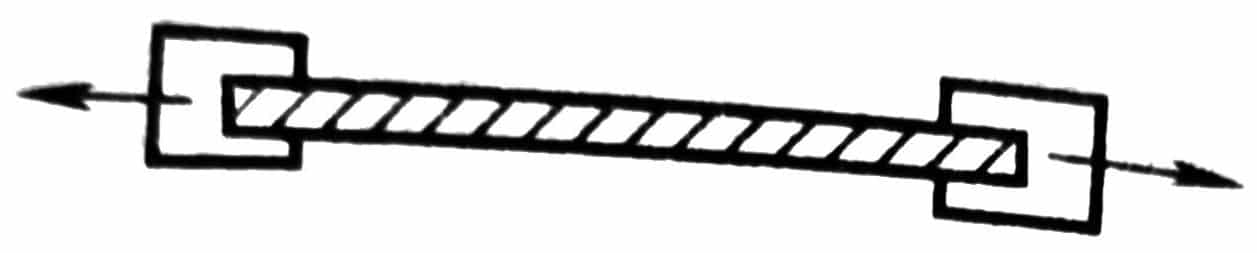 | Thin plate warping, profile distortion, pipe strip wire straightening |
| Press correction |  | Local correction of plates, tubes, and profiles |
| Straightening machine correction | 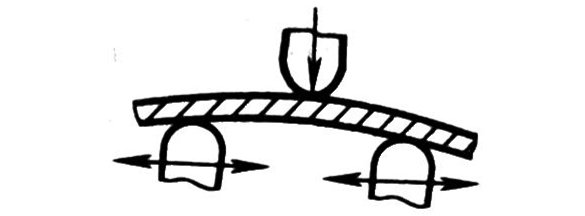 | Angle steel, channel steel, I-beam straightening, and also used for bending |
| Positive roller straightening machine |  | Plate, tube, profile correction |
| Skew roller straightening machine | 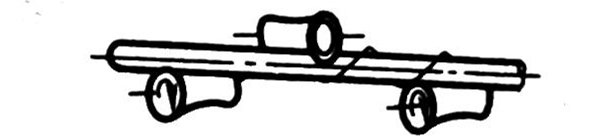 | Round section material correction |
| Skew roller straightening machine | 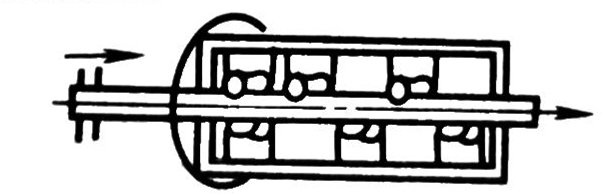 | Fine calibration of thin-walled thin tubes with circular cross-sections |
| Skew roller straightening machine | 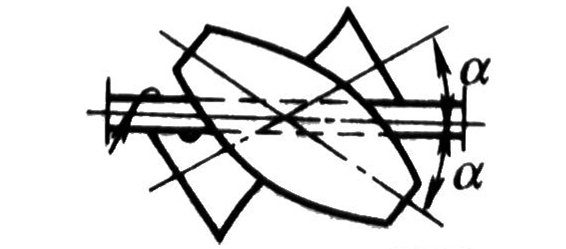 | Round section thick-walled pipe and bar correction |
The corrective accuracy that can be achieved by mechanical correction is shown in Table.
| Machine | Scope of correction | Accuracy of correction/mm |
| Multi-roll plate straightening machine | Sheet leveling | 1.0-5.0 |
| Multi-roll angle straightening machine | Angle steel | 1.0 |
| Straightening and cutting machine | Coil (wire, bar, flat steel, strip) straightening and cutting | 0.5-0.7 |
| Skew roller straightening machine | Straightening of round section pipes and bars | Blank 0.5-0.9 Concentrate 0.1-0.2 |
| Machine | Scope of correction | Accuracy of correction/mm |
| Horizontal bending press | I-beam, channel steel, bar-shaped welded components | 1.0 |
| Vertical bending press | I-beam, channel steel, bar-shaped welded components | Concentrate 0.05-0.15 |
| Manual press | Correction of blanks | Concentrate 0.05-0.15 |
| Friction press | Correction of blanks | Concentrate 0.05-0.15 |
| Hydraulic Press | I-beam, channel steel, H steel, bar-shaped welded components | Concentrate 0.05-0.15 |
Correction of Sheet Metal
The deformation of the steel plate is usually corrected by a multi-roll leveler. Correction usually, the thicker the steel plate, the easier the correction: the thinner the steel plate, the easier the deformation, the more difficult the correction.
According to the number of rollers, the leveler can be divided into five rollers, seven rollers, nine rollers, twenty-one rollers. According to the relative position can be divided into parallel and non-parallel. A large multi-axis leveler can correct steel plate with a thickness of 50mm and width of 2000mm. Usually, the thickness of more than 3mm steel plate, in the five rollers or seven roller leveling machine, the thickness of the thin steel plate below 3mm, must be in the nine rollers, eleven rollers, or more roller leveling machine.
Fundamental Principles of Correct Steel Plate
The basic principles of the correct steel plate are shown in the picture. 5, 7 rollers for the feed guide, 6 are discharging guide shaft rollers, and the rest are working shaft rollers. When feeding between the upper and lower shaft rollers, 1, 2, 4 rollers form a group to make the sheet upward bending, 2, 3, 4 three-axis roller formed a group, so that the sheet downward bending, steel plate after many times over the yield limit of stretching and bending, so that the original tight part is stretched, and the original loose part is balanced plastic flow, so as to achieve the purpose of correction.

The Method to Determine the Roller Down Degree of the Upper Shaft
The pressure of the roller on the leveling machine directly determines the gap between the rollers. When the pressure of the upper roller is moderate, only the tight part of the sheet material is stretched, and the original loose part is balanced and corrected. The sheet material will be corrected, which is the most ideal. When the pressure of the upper shaft roller is insufficient, the tight part of the sheet material also produces tension, but it is not balanced with the loose part, and the sheet material is not completely flattened; When the pressure of the upper shaft roller is too large, not only the tight parts are stretched, the loose parts also have different degrees of stretching, although the degree of stretching is balanced, the plate is corrected, but the plate grain is distorted, rupture and excessive cold hardening, reducing the service life of the plate. Therefore, the determination of the upper roll-down degree will directly affect the correction effect of sheet metal.
The rolling down degree (that is, the gap between the shaft rollers) of the leveler is generally defined as the feeding end guide shaft rollers greater than the plate thickness of 2~3mm (for easy insertion of the corrected plate), the discharging end is equal to the thickness of the plate, the working shaft roller according to the different thickness of the plate, the front end is less than the thickness of the plate 1~5mm, increasing from front to back, to the discharging end of the guide shaft roller is equal to the thickness of the plate to adjust the method. But in the actual correction, this method is not easy to measure. Therefore, according to experience, the following methods are commonly used in the work to determine the degree of rolling down on the leveling machine.
- The test strip method:Takes a strip of the same thickness as the leveling plate into the leveling machine, by hand pressure to contact with the strip and have a certain pressure, but also with the observation of the height and level of the upper shaft roller, and then the strip roller out of the leveling machine, observe the flatness and make a test and adjustment, the pressure is called the foundation pressure. Then into the corrected plate, roller pressure, and then observe the flat straight degree, and listen to the mechanical operation of the load sound, determine whether the pressure of the roller on the shaft is included and then fine-tuning, or then roll out a section of fine-tuning, the final determined pressure is called the actual work.
- First, insert and then adjust the method: The sheet material to be sent to the Leveling machine, with the hand of the force bar pressure on the T force, then, according to the pressure for batch leveling. Rolls, according to the pressure of the degree of pressure to determine whether has been pressed to the extent, and then use the method of observation, to see whether the upper edge line of the bearing seat of the N upper shaft roller is equal height, whether the shaft roller is left and right level, and then open the leveling machine, sheet material sent to the bracket, according to the degree of flatness and rotation of the shaft roller to determine the pressure and lift. If some of the upper shaft rolls do not rotate or stop when rotating, it means that this shaft roller is not pressed down enough; If all the upper shaft roller can rotate, at least there is a certain pressure; If the deviation is found, it means that the side of the deviation is pressed down to a large extent, and the other side is pressed down to a small extent. Then, it shall be adjusted according to the pressure degree. If the coil plate is sent to the bracket to cut into a small section of the plate, there is still a large area of slow flat bending, said that the pressure is not enough, should also be appropriately pressed. As for the pressure degree of the guide shaft roller at the discharge end, it can be up-warped or up-warped according to the end of the plate after discharge.
The Operational Method of Sheet Correction
Leveler correction has a wide range of sheets, such as coil plate, convex plate, wave plate, and zero plates, etc. It works as follows.
- The operation of rolling plate correction: It shall be determined according to the above description of the roll downstroke on the leveler. In this method, the working shaft roller is adjusted to the working pressure, the guide shaft roller 5 at the feeding end is raised, the coiling plate is lifted, and one end of the coiling plate is inserted between the feeding guide shaft roller 5 and 7. At the same time, the leveler is opened intermittently, so that it slowly enters a distance (1~2 working shaft rollers), and then the position of the endplate is adjusted by moving the front, back, and left of the crane. Make it parallel to the outer contour of an upper or lower shaft roller (can be observed from the side) to prevent the placed plate from running off, and then press down the feeding end of the upper shaft roller 5, and apply greater pressure to prevent the dislocation of the coil plate placed in the coil bracket, then the boot can be put on the plate. By observing the flatness of the upper plate sent to the bracket and listening to the sound of the load when the machine is running, the upper shaft roller is pressed down to determine whether it is appropriate or not, and adjust it, then the subsequent batch plate correction can be carried out.
- Correction of the twisted narrow batten: The narrow batten cut on the shearing machine is distorted because the edge is inclined, so the batten cut is distorted, and there are also horizontal bending and vertical bending deformation. This batten can also be corrected on the leveling machine. According to the above method, the foundation pressure of the upper shaft roller is extracted, and the guide shaft roller 5 on the feeding end is lifted, which is slightly higher than that of the same thick plate, so as to adapt to the need that the twisted plate is not easy to be inserted. The pressure of the working shaft roller is slightly higher than that of the correction of the same thick plate, so as to produce excessive plastic deformation, so as to obtain a certain correction effect. According to the correct depth,it can also be sent into the second or third time, but after the second turn and a little pressure, can achieve a better correction effect. In this correction method, the vertical bending of the batten correction effect is poor, out of the machine can be manually corrected for supplementary correction.
- Correction of thin sheet metal, a thick steel plate can be used as a backing plate, and the sheet metal can be corrected on top, or several long thin plates can be overlapped and put into the correction, as shown in the picture.

- Correction of the middle flat and the edge of the wavy plate: For the middle flat and the edge of the wavy plate, can be added in the middle of the flat part of the plate, so that the middle of the thin elongation, and the edge of the same length, and to achieve the purpose of correction, as shown in the picture.

- Correction of the wavy middle part and flat sides on both sides: For the middle part which is wavy and flat sides on both sides, pads can be added on both sides to make both sides thinner and stretch as long as the middle part to achieve correction. the goal of. as the picture shows.

- Correction of one side is wavy and the other side is flatter: For one side that is wavy and the other side is flatter, a pad can be added on the flatter side to make it thin and elongated, and the other side is wavy, etc. Long, this board can be corrected, as shown in the picture.

In addition, pressure can be directly applied to the flat side to make this side stretched and thinner, and the two sides are equal in length, which can be corrected, as shown in the picture.

- Correction of flat bends on the three-roller bending machine: The hot-cut steel strips are easy to bend, and there are few flat bends and twists. The steel strips cut on the oblique shearing machine are easy to form compound bends, that is, vertical bending and flat bending. And distortion, the thinner the plate, the more obvious. Only flat bends and partial distortions can be corrected on the flattening machine, and flat bends and distortions can be corrected on the three-axis roll bending machine. The following picture shows the schematic diagram of correcting the 14mm*300mm*2560mm steel plate cut on the oblique shearing machine.

During operation, a 32mm thick backing plate is hoisted into the coiling machine, and then the vertical shaft roller of the steel strip is rolled into the coiling machine, the upper shaft roller is pressed down and rolled back and forth, the flat bend of the steel plate is corrected and the part is eliminated distortion. As for the degree of roll reduction of the upper shaft, it depends on the correction situation, but the backing plate must not be curved.
The premise of using this method is that the backing plate should be quite thick, generally between 30-40mm, and the greater the rigidity difference between the backing plate and the plate to be corrected, the better.
- Distortion correction on the three-roller bending machine: When correcting the distortion of the steel strip, the steel strip should be at a certain angle with the shaft roller. Due to the difference in the degree of distortion, the oblique angle cannot be determined in advance. Generally, the correction is based on the size of the pressure. effect. When correcting, you should observe the correction effect from light to heavy use test, and then correct in batches. Don’t press down too much. If you press too much, it will become anti-distortion, which is counterproductive. Picture (a) and (b) respectively show the correcting methods of twisted steel strips to the right and left. The correction effect is related to the angle at which the sheet is placed on the roller, and has nothing to do with which end it is placed in.
If a backing plate is placed under the corrected plate to correct the distortion, the correction of the distortion of the plate cannot be completed at all, because the backing plate cannot be arced.

Correction of Profile
The mechanical correction of pipes, steel profiles, and other profiles mostly uses cold leveling, that is, multi-roll profile leveling machines, profile straightening machines, and presses are used for correction.
Straighten with a Multi-Roll Profile Straightening Machine
The working principle of the multi-roll profile straightening machine is similar to that of the sheet flattening machine. The difference is that the leveling roller is a roller whose contour is adapted to the cross-section of the straightened profile, as shown in the picture. To correct different profiles, rollers with different contours can be exchanged. Similar to the principle of plate leveling, when the profile passes through the upper and lower rows of rollers, it is repeatedly bent, so that the fibers are elongated and corrected. The roller axis of the positive roller machine is mutually
parallel, suitable for all kinds of profiles. The rollers of the oblique mixer are hyperbolic and are mostly arranged in groups (2~3 per group). The roller shafts are inclined to make the material be rounded produce additional rotational movement. , Enhance the correction effect, suitable for tube, rod, wire correction.

With Profile Straightening Machine to Correct
The bending deformation of section steel and all kinds of welded beams can also be corrected by the reverse bending method of section steel straightener. The moving parts of the straightener are arranged horizontally, and the moving parts are generally double-headed.
When working, the steel is placed between the support and the push support, the protruding part is blocked by the push support, the pressure is pressed to the support, and it can move along the length direction, the position of the support can be adjusted by the control handwheel appropriately to adapt to the bending of the steel to different degrees. When the push support is driven by the motor for horizontal reciprocating movement, it will be periodically applied to the corrected steel thrust, so that it produces reverse bending and achieve the purpose of correction.
The initial position of the push brace can be adjusted to control the amount of deformation. The table is provided with a roller column to support the section steel, reducing the friction of the section steel moving back and forth. A section steel straightening machine can also be used for section steel bending processing, that is bending and rectifying machine.
With Press Machine to Correct
The rectifying principle, sequence, and method of the profile and all kinds of welded beams corrected by the press should be flat with the same thickness of the plate, but the placement position, pressure position, pad thickness, and pad position of the workpiece should be reasonably set according to the size of the workpiece and the deformation position, as well as whether the pad and the square steel are needed, in order to improve the quality and speed of correction. The following picture shows the schematic diagram of the press correction of the profile.

I want to know the shearing machine, pls send me your information